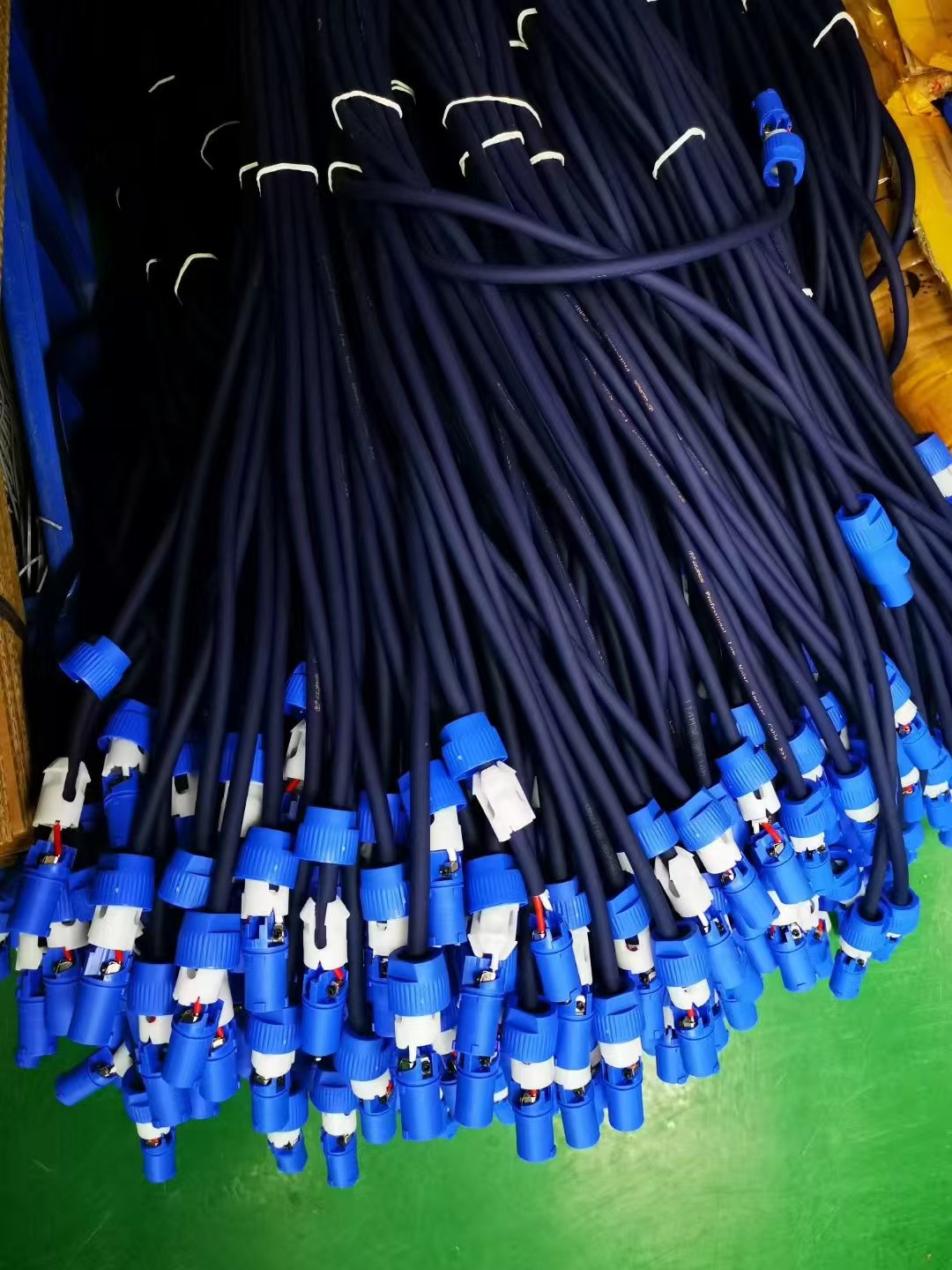
Choosing a custom wire harness manufacturer is not only a price comparison. The right supplier should help convert electrical requirements into a reliable, manufacturable, tested assembly that fits your product, compliance needs, and production schedule.
For OEM buyers, the fastest way to reduce sourcing risk is to evaluate five areas: engineering support, material control, workmanship standards, test coverage, and production scalability. A supplier that performs well in these areas is more likely to deliver stable quality from prototype through mass production.
Quick Answer for OEM Buyers
A good custom wire harness manufacturer should be able to review drawings or samples, recommend wire and connector options, build prototypes, document the bill of materials, perform electrical testing, control crimping and assembly quality, and support repeat production with traceable processes. Ask for evidence of testing, workmanship criteria, quality records, and communication speed before approving a supplier.
Why Wire Harness Supplier Selection Matters
Wire harnesses connect power, signals, sensors, control units, motors, displays, batteries, and other critical components. A small wiring issue can lead to product failure, rework, warranty claims, or production delays.
In B2B sourcing, the lowest unit price often ignores hidden costs such as:
- Engineering revisions after the first prototype
- Connector substitutions that affect fit or performance
- Poor crimp quality that creates intermittent failures
- Inconsistent labeling or routing during assembly
- Missing inspection reports or test records
- Long lead times when demand changes
The goal is not simply to find a supplier that can assemble wires. The goal is to find a manufacturing partner that can build the same harness correctly, repeatedly, and with clear documentation.
1. Check Engineering and DFM Support
Before production starts, a capable wire harness supplier should review your drawings, sample harness, electrical requirements, and application environment. This step helps identify risks early.
Key engineering questions to ask:
- Can the supplier review your drawing, schematic, or sample harness?
- Can they support design-for-manufacturing feedback?
- Can they recommend wire gauge, insulation, shielding, connector type, terminals, labels, and protective coverings?
- Can they create or validate a bill of materials?
- Can they identify missing tolerances, pinout details, or routing requirements?
For early-stage projects, engineering support can be more valuable than a quick quote. A supplier that asks detailed questions before quoting is often protecting both sides from errors later.
2. Evaluate Material and Component Control
Custom wiring harness quality depends heavily on consistent materials. Wire, terminals, connectors, seals, heat shrink tubing, sleeves, cable ties, and labels all affect performance.
Important material control points include:
- Approved part numbers and alternates
- Connector brand and compatibility
- Wire gauge, conductor material, stranding, and insulation type
- Temperature, voltage, flame, oil, moisture, or abrasion requirements
- RoHS, REACH, UL, or application-specific material needs
- Clear handling of customer-specified components
If a component is hard to source, the supplier should not quietly replace it. Substitutions should be documented and approved because connector fit, terminal retention, and electrical performance can change.
3. Ask About Workmanship Standards
For wire harnesses and cable assemblies, workmanship consistency is critical. Buyers should ask how the supplier controls stripping, crimping, soldering, terminal insertion, labeling, bundling, and final assembly.
IPC/WHMA-A-620 is a widely recognized workmanship standard for cable and wire harness assemblies. Even when a project does not formally require certification, referencing recognized workmanship criteria can help align expectations between buyer and supplier.
Practical workmanship checks include:
- Crimp height and pull-force control
- Correct strip length and conductor exposure
- Terminal insertion depth and retention
- Heat shrink position and recovery
- Label placement and readability
- Harness dimensions, branch lengths, and routing
- Protection against abrasion, vibration, moisture, or heat
Ask whether the supplier uses documented work instructions, inspection checklists, and trained operators for repeatable production.
4. Confirm Electrical and Functional Testing
Every custom wire harness should be tested according to its risk level and application. Basic continuity testing may be enough for simple harnesses, while complex assemblies may require hipot, insulation resistance, pin-to-pin verification, functional testing, or fixture-based inspection.
Common test options include:
- Continuity test
- Open/short test
- Miswire test
- Insulation resistance test
- Hipot test when required by design
- Pull-force test for terminals
- Visual inspection against drawing or sample
- Functional test with customer-provided fixtures
For OEM production, ask whether the supplier can provide test records, inspection reports, first article inspection, and traceability by batch or lot.
5. Review Prototype-to-Production Capability
A supplier may build one sample successfully but struggle when the order moves to stable production. Buyers should evaluate whether the supplier can scale without losing quality control.
Questions to ask before mass production:
- What is the prototype lead time?
- What is the normal production lead time?
- How are engineering changes controlled?
- Can the supplier support low-volume and repeat orders?
- What inspection records are kept?
- How are nonconforming products handled?
- How does the supplier manage urgent demand or component shortages?
The best supplier for an OEM is often one that can support the full lifecycle: sample review, prototype, pilot run, production, revisions, and long-term replenishment.
6. Match the Supplier to Your Industry Requirements
Different industries have different wire harness priorities.
Automotive and EV Applications
Automotive and EV harnesses often require vibration resistance, temperature durability, connector sealing, clear traceability, and stable repeat production. Buyers should pay special attention to terminal retention, routing protection, and material approvals.
Industrial Equipment
Industrial harnesses may need abrasion resistance, oil resistance, flexible routing, clear labeling, and reliable performance in control cabinets, machines, sensors, motors, and power systems.
Medical and Laboratory Equipment
Medical and laboratory cable assemblies may require tighter documentation, clean assembly practices, biocompatibility considerations for exposed materials, and careful change control. If your product is regulated, verify quality system requirements before production.
Consumer and Commercial Electronics
These projects often emphasize cost efficiency, compact routing, stable lead time, and reliable connector sourcing. Early DFM review helps reduce assembly time and avoid fit issues.
7. Use a Simple Supplier Evaluation Checklist
Before approving a custom wire harness manufacturer, score the supplier on the following items:
| Evaluation Area | What to Confirm | Why It Matters |
| Engineering review | Drawing, sample, BOM, and DFM support | Reduces design and quoting errors |
| Materials | Approved wires, connectors, terminals, and alternates | Prevents unapproved substitutions |
| Workmanship | Crimping, stripping, soldering, labeling, and routing control | Improves repeatability |
| Testing | Continuity, open/short, hipot, functional, or fixture testing | Catches defects before shipment |
| Documentation | BOM, inspection reports, test records, revision control | Supports traceability |
| Communication | Fast response and clear technical questions | Reduces sourcing delays |
| Scalability | Prototype, pilot, and repeat production capability | Supports long-term supply |
8. Red Flags When Choosing a Wire Harness Supplier
Be cautious if a supplier:
- Quotes without reviewing drawings, samples, or application requirements
- Cannot explain its inspection and testing process
- Uses vague component descriptions instead of part numbers
- Changes materials without approval
- Provides no revision control or production records
- Avoids questions about workmanship criteria
- Cannot provide clear lead times or packaging requirements
These issues can become expensive once the harness is integrated into a finished product.
FAQ
What is a custom wire harness manufacturer?
A custom wire harness manufacturer builds electrical harnesses according to a customer’s drawing, sample, schematic, or application requirements. The supplier typically handles wire cutting, stripping, crimping, soldering if needed, connector assembly, labeling, bundling, testing, and packaging.
What information should I provide for a wire harness quote?
Provide drawings, photos, samples, wire lengths, connector part numbers, pinout, wire gauge, insulation requirements, quantity, application environment, testing requirements, and any compliance needs. More complete information usually leads to faster and more accurate quoting.
What tests are used for wire harness quality control?
Common tests include continuity, open/short, miswire, pull-force, insulation resistance, hipot when required, and visual inspection against drawings or golden samples. Complex harnesses may also require functional testing with fixtures.
What is the difference between a wire harness and a cable assembly?
A wire harness usually groups multiple wires into a routed assembly for power or signal distribution. A cable assembly may include jacketed cables, molded connectors, shielding, or more complex signal protection. In practice, many OEM projects use both terms depending on application and structure.
How can I reduce wire harness sourcing risk?
Start with clear drawings or samples, confirm the bill of materials, approve prototypes before production, require documented testing, control revisions, and choose a supplier that communicates engineering questions early.
Suggested Internal Links
- Link to a future or existing service page: `/custom-wire-harness/`
- Link to a future or existing service page: `/cable-assembly/`
- Link to a future or existing quality page: `/quality-control/`
- Link to a future or existing contact page: `/contact/`
Suggested External References to Verify Before Publishing
- IPC/WHMA-A-620 workmanship requirements for cable and wire harness assemblies
- ISO 9001 quality management principles
- ISO 13485 if targeting regulated medical device supply chains
- IATF 16949 if targeting automotive supply chains