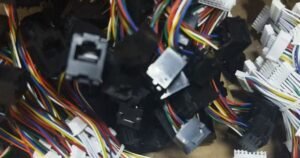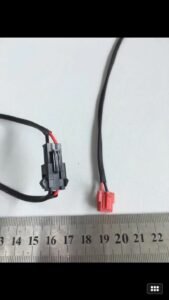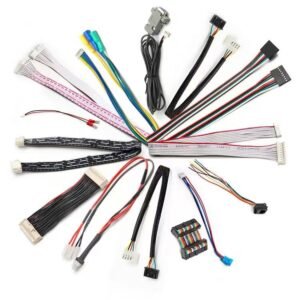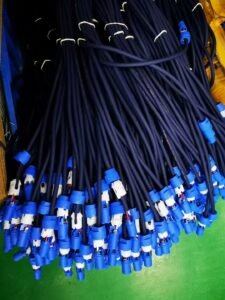
Waterproof wire harnesses are used in products that must operate reliably in rain, washdown, outdoor exposure, high humidity, or splash-prone environments. For OEM buyers, the challenge is not only finding a supplier that can assemble wires. It is finding a supplier that understands sealing structure, connector compatibility, material selection, and test requirements.
This FAQ answers the most common sourcing and engineering questions about waterproof wire harness projects so buyers can reduce quality risk before sample approval and mass production.
Quick Answer
A waterproof wire harness is a cable or wiring assembly designed to resist water ingress through sealed connectors, grommets, overmolding, heat shrink, boots, jackets, and controlled assembly workmanship. Buyers should confirm the target IP rating, operating environment, connector system, material specifications, sealing method, and test standard before approving production.
What Is a Waterproof Wire Harness?
A waterproof wire harness is an electrical assembly designed to keep moisture away from conductors, terminals, and connection points. Depending on the application, the harness may need to resist:
- Rain and outdoor exposure
- Splashing water
- High humidity and condensation
- Periodic washdown
- Dust and dirt together with moisture
- Temporary immersion
In practice, waterproof performance depends on the full system, not just one connector. A harness can still fail if wire seals, branch transitions, boots, splices, or routing protection are poorly designed or assembled.
1. What IP Rating Do I Need?
One of the first questions buyers ask is whether they need IP65, IP67, or IP68. The answer depends on the real use environment.
- `IP65` is commonly used when the harness must resist water jets or splash exposure
- `IP67` is often used when the harness may face temporary immersion
- `IP68` is generally used when longer or deeper immersion resistance is required
The important point is that IP ratings should not be selected by guesswork. The buyer and supplier should define:
- Exposure type: splash, spray, washdown, or immersion
- Duration and depth, if immersion is possible
- Operating temperature range
- Chemical exposure such as oil, cleaning fluid, salt, or UV
- Whether the harness is static or flexing during use
If these details are unclear, a supplier may recommend the wrong connector or sealing structure.
2. Are Waterproof Connectors Enough by Themselves?
No. A sealed connector is important, but it is only one part of a waterproof wire harness.
Other sealing points may include:
- Wire entry seals
- Rear grommets
- Heat shrink tubing with adhesive
- Overmolded transitions
- Splice protection
- Branch breakout sealing
- Cable jacket termination points
OEM buyers should ask the supplier where every possible ingress path exists. A harness can use an expensive waterproof connector and still fail because moisture enters at a branch or splice area.
3. What Materials Matter Most?
Material selection has a direct impact on waterproof performance and service life. Key items include:
- Wire insulation material
- Connector housing material
- Terminal plating
- Rubber seals and gaskets
- Heat shrink type
- Sleeving or conduit
- Potting or overmolding compound if used
For example, a harness used outdoors may need better UV resistance. A harness used near engines, pumps, or industrial equipment may need oil resistance, heat resistance, abrasion resistance, or chemical resistance in addition to sealing performance.
When requesting a quote, buyers should share the actual environment so the supplier can recommend suitable materials instead of only the lowest-cost option.
4. How Is Waterproof Performance Tested?
Testing should match the real application. Common validation methods may include:
- Continuity and open/short testing
- Insulation resistance testing
- High-potential testing when required
- Water ingress or sealing tests
- IP-rating verification at the connector or assembly level
- Visual inspection of seals and assembly points
- Pull-force testing for crimped terminals
- Environmental testing such as thermal cycling or humidity exposure
For higher-risk applications, OEM buyers should ask whether the supplier can provide test records, first article inspection, and sample approval documentation.
5. What Is the Difference Between IP67 and IP68 Harnesses?
Many buyers use these terms interchangeably, but they should not be treated as identical.
In general:
- `IP67` usually targets temporary immersion under defined conditions
- `IP68` usually targets more demanding or longer immersion conditions defined by the application or product requirement
The connector family, seal design, cable exit structure, and test setup all matter. If your product will be used in outdoor vehicles, marine systems, agricultural equipment, battery systems, or sensor assemblies, confirm the exact target requirement before sample release.
6. Which Industries Commonly Use Waterproof Wire Harnesses?
Waterproof wire harnesses are widely used in:
- Automotive and EV systems
- Agricultural machinery
- Marine equipment
- Outdoor lighting
- Industrial control systems
- Battery packs and energy storage equipment
- Sensors, pumps, and actuator assemblies
- Construction equipment
Each industry has different priorities. Automotive projects may emphasize vibration resistance and sealed connectors. Industrial projects may emphasize oil resistance and routing protection. Outdoor electronics may focus on UV exposure and stable long-term sealing.
7. What Information Should I Send for a Quote?
To receive an accurate quotation faster, buyers should provide:
- Drawings, schematics, or sample harnesses
- Connector part numbers or mating interface information
- Wire gauge and conductor count
- Wire lengths and branch dimensions
- IP rating target
- Application environment
- Quantity and forecast volume
- Testing requirements
- Labeling, packaging, and traceability requirements
Incomplete quote information often leads to delays, incorrect assumptions, or rework after the first sample.
8. What Are Common Waterproof Harness Failure Points?
Common failure points include:
- Incorrect seal size for the wire diameter
- Poor terminal crimping
- Damaged seals during insertion
- Incomplete terminal seating
- Weak branch protection
- Unsealed splices
- Incompatible connector combinations
- Cable bending or strain near the sealed area
These issues are why workmanship control matters as much as component selection. Buyers should ask how the supplier controls assembly steps, inspection criteria, and operator training.
9. Do Waterproof Wire Harnesses Need Overmolding?
Not always. Overmolding can improve sealing and strain relief in some designs, but it is not required for every project.
The right sealing solution depends on:
- Connector style
- Available space
- Flex requirements
- Cost target
- Production volume
- Serviceability needs
For some harnesses, sealed connectors and adhesive heat shrink are enough. For others, overmolding or potting may be the better long-term solution. A good supplier should explain the tradeoff clearly instead of pushing a one-size-fits-all method.
10. How Can I Choose the Right Waterproof Wire Harness Supplier?
The best supplier should be able to support more than assembly. Buyers should look for:
- Engineering review before quote approval
- Knowledge of sealed connector systems
- Clear material recommendations
- Controlled crimping and seal insertion processes
- Electrical and sealing test capability
- Sample-to-mass-production consistency
- Revision control and traceability
- Fast communication on design questions
If a supplier can only discuss price but cannot explain sealing risk, connector compatibility, or validation methods, that is a warning sign.
OEM Buyer Checklist
Before approving a waterproof wire harness supplier, confirm the following:
| Evaluation Area | What to Confirm | Why It Matters |
| IP rating definition | Splash, washdown, or immersion requirement | Prevents under-specification |
| Connector system | Sealed connector family and mating compatibility | Reduces leakage risk |
| Wire and seal match | Correct wire OD and seal sizing | Prevents ingress at wire entry |
| Assembly process | Seal insertion, crimp control, and inspection | Improves repeatability |
| Validation | Electrical and water-resistance testing | Confirms performance |
| Environment | Heat, oil, UV, vibration, or chemical exposure | Supports material selection |
| Documentation | BOM, revision, test record, labeling | Helps traceability |
FAQ
What is a waterproof wire harness used for?
A waterproof wire harness is used in products exposed to water, humidity, splash, dust, or outdoor conditions. Common applications include vehicles, agricultural machinery, lighting systems, sensors, pumps, and industrial equipment.
Is a waterproof wire harness the same as an IP67 wire harness?
Not always. A waterproof wire harness is a broader term. IP67 is one specific protection target under defined conditions. The final requirement may instead be IP65, IP67, IP68, or another application-specific sealing standard.
Can I use any sealed connector for a waterproof cable assembly?
No. The connector must match the wire size, terminal system, operating environment, and mating interface. The harness design also needs proper sealing at other potential ingress points.
What test should I request from a waterproof wire harness supplier?
At minimum, ask about continuity, open/short testing, inspection of sealing components, and any application-relevant water-resistance validation. More demanding projects may also require insulation resistance, hipot, environmental testing, and first article documentation.
What causes waterproof harness failures in production?
Common causes include damaged seals, incorrect wire-to-seal fit, poor crimping, terminal misalignment, unsealed branches, and weak strain relief near connector exits.
Final Takeaway
For OEM buyers, a waterproof wire harness should be evaluated as a complete system, not only as a sealed connector. The right supplier should understand IP targets, material selection, seal fit, workmanship control, and application-based testing before production begins.
If you are sourcing a sealed wire harness, it is worth aligning drawings, samples, connector specifications, and test expectations early. That step reduces costly revisions and helps move from prototype to repeat production with fewer quality risks.