Quick Answer
A reference photo is a useful starting point for a custom wire harness quote because it can reveal connector families, branch count, wire colors, sleeving, and overall form. But a photo alone cannot define the electrical design. To quote and build the correct harness, an OEM should also provide a drawing or schematic, connector part numbers and pinout, wire sizes and lengths, application environment, quantity, and required testing.
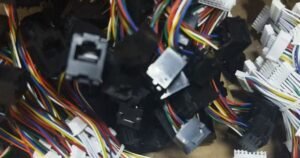
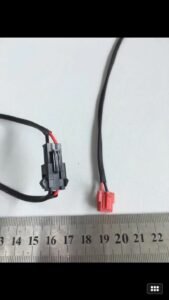
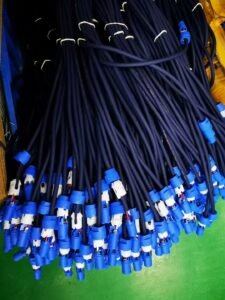
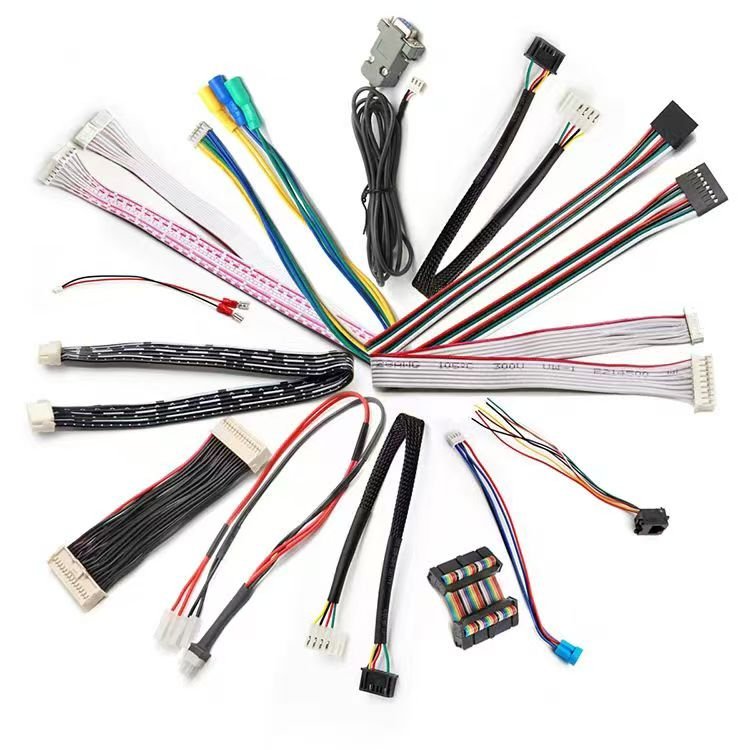
The product image above shows a range of small custom harness assemblies: multi-pin connector leads, ribbon-style cable assemblies, sleeved branches, and color-coded wires. These examples illustrate why each harness needs controlled part numbers, termination details, and inspection criteria—not simply a similar-looking replacement.
What a Reference Photo Can Tell a Wire Harness Supplier
A clear sample photo helps a supplier begin a practical discussion. It can indicate:
- Approximate connector style and number of positions
- Number of branches and breakout locations
- Visible wire colors, sleeving, tubing, and strain-relief features
- Whether the assembly uses ribbon cable, discrete wires, or a mix of both
- General routing and packaging considerations
- Whether a mating connector, latch, keying feature, or mounting detail may need further identification
For early sourcing, this is valuable. It helps avoid vague requests such as “please quote a cable like this.” A photo creates a shared visual reference, while the technical documents define what must actually be manufactured.
Why a Photo Is Not Enough for Production
Two harnesses can look nearly identical and still be electrically or mechanically incompatible. A different connector key, terminal plating, wire gauge, insulation rating, pin assignment, or branch length can affect fit, current capacity, signal integrity, and safety.
For that reason, a production-ready custom wire harness RFQ should never rely on an image alone. The supplier needs controlled information that can be checked against the finished part.
Six Items to Add to Your Custom Wire Harness RFQ
1. Connector Part Numbers and Pinout
Provide manufacturer part numbers for plugs, receptacles, terminals, seals, backshells, and mating parts where available. Include a pin-to-pin table or schematic that states which circuit goes to each cavity. If the connector is unknown, send close-up photos of all sides, cavity count, keying, latch, dimensions, and the mating half.
2. Wire Specification and Lengths
State conductor size, insulation type, color, stripe/tracer requirements, and finished length for each circuit. Specify whether dimensions are measured end-to-end, connector face-to-face, or to a breakout point. For repeated branches, identify any critical tolerance separately.
3. Application Environment
Explain where the harness will operate: indoor equipment, industrial machinery, vehicle, medical device, outdoor enclosure, or another environment. Include voltage/current, temperature, movement/flexing, vibration, moisture, chemical exposure, EMI/shielding needs, and installation constraints when relevant.
4. Build and Protection Details
Identify required braiding, sleeving, heat shrink, conduit, tapes, labels, overmolding, grommets, strain relief, and shielding termination. A photo may show these features, but the RFQ should clarify material, coverage, location, and acceptance expectations.
5. Quality and Testing Requirements
Specify the drawing revision, workmanship standard, inspection points, and records required with delivery. Many assemblies need continuity, pin-mapping, and short-circuit checks; other applications may require approved insulation-resistance, dielectric-withstand, pull-force, dimensional, sealing, or environmental requirements. Engineering should define the numerical limits and test parameters.
6. Commercial Details
Add prototype quantity, forecast volume, desired delivery date, target market, packaging rules, and approved-substitution process. These details influence material sourcing, fixture planning, manufacturing method, and quote accuracy.
A Simple RFQ Package Checklist
Use this checklist when you send a harness sample or reference image:
- Reference photo and physical sample availability
- Released drawing, schematic, or clear pin-to-pin netlist
- Connector, terminal, wire, and protective-material part numbers
- Circuit list with wire gauge, color, length, and tolerances
- Branch dimensions and connector orientation
- Electrical ratings and operating environment
- Test requirements and required report format
- Standards, customer specifications, and any restricted-material requirements
- Prototype and production quantities
- Desired ship date, delivery location, packaging, and labeling requirements
If information is incomplete, label it as “to be confirmed” rather than guessing. This lets the supplier separate preliminary assumptions from approved requirements.
How to Use a Sample Harness Without Losing Critical Information
When sending a sample, take photos before disassembly and label every connector and branch. Record connector cavity numbers, wire colors, label text, dimensions, and any visible manufacturing marks. If a circuit is safety-critical or carries high current, do not infer its function from color alone—confirm it against the approved electrical documentation.
For a reverse-engineering request, agree in advance on the scope. The supplier can inspect physical characteristics, but the OEM remains responsible for approving the final electrical design, intellectual-property permissions, performance requirements, and any compliance obligations.
From Image to Manufacturable Harness
The best handoff converts visual reference into controlled build data:
1. Start with the image or sample to identify the general assembly.
2. Confirm connector families and mating interfaces.
3. Create or validate a drawing and pin-to-pin netlist.
4. Define wire, protection, dimensions, and assembly details.
5. Approve a test plan and first-article requirements.
6. Lock the revision before production and control later changes.
This process reduces the chance of an attractive sample photo becoming an incorrect production part.
How WireAssyTech Can Help
WireAssyTech can use a reference image and available documentation to begin a custom wire harness discussion. For an accurate quotation, send the supporting technical details above and identify any critical connector, test, environment, or traceability requirements. Any material availability, certification, compliance, test capability, or lead-time requirement should be confirmed for the specific project before it is treated as a commitment.
Frequently Asked Questions
Can I get a wire harness quote from a photo?
Yes, a photo can support an initial review or budgetary discussion. A final production quote normally needs connector identification, pinout, wire specifications, dimensions, quantity, and testing requirements.
What if I do not have a drawing?
Send the physical sample if permitted, close-up photos, dimensions, mating connectors, and any available schematic or equipment information. The final design should still be reviewed and approved by the responsible OEM engineer before production.
Can wire colors define the circuit function?
No. Colors are useful references, but circuit function should be confirmed from the approved schematic, netlist, or pinout.
What test should be requested for a custom harness?
Continuity, correct pin mapping, and short-circuit checks are common requirements. Additional tests depend on the application and must be defined with appropriate limits by qualified engineering.
Suggested Internal Links
Verify live URLs before publishing:
- Custom wire harness service page — anchor: custom wire harness assembly
- Cable assembly service page — anchor: custom cable assembly solutions
- RFQ/contact page — anchor: request a wire harness quote
- Related article:
/wire-harness-testing-requirements/ - Related article:
/custom-wire-harness-manufacturer-checklist/